 Aveho
Where you can donate furniture and household goods
Let's be honest... when you downsize or empty a house, donation is where most of the stuff will end up. Many household items aren't really worth selling, but are far too good to just throw away. Donation is a great way to reduce waste, help other people, and give cherished items a new home. The catch is that some charities are pickier than many people realize, and having your donation rejected just wastes time and creates frustration. So here's some tips to help make it all a bit easier!
By Brian Filip, founder of Aveho and an experienced executive in the home-contents valuation industry. Before founding Aveho, Brian led a team of over 250 people at one of the nation's largest providers of home-contents valuation services to insurance companies.
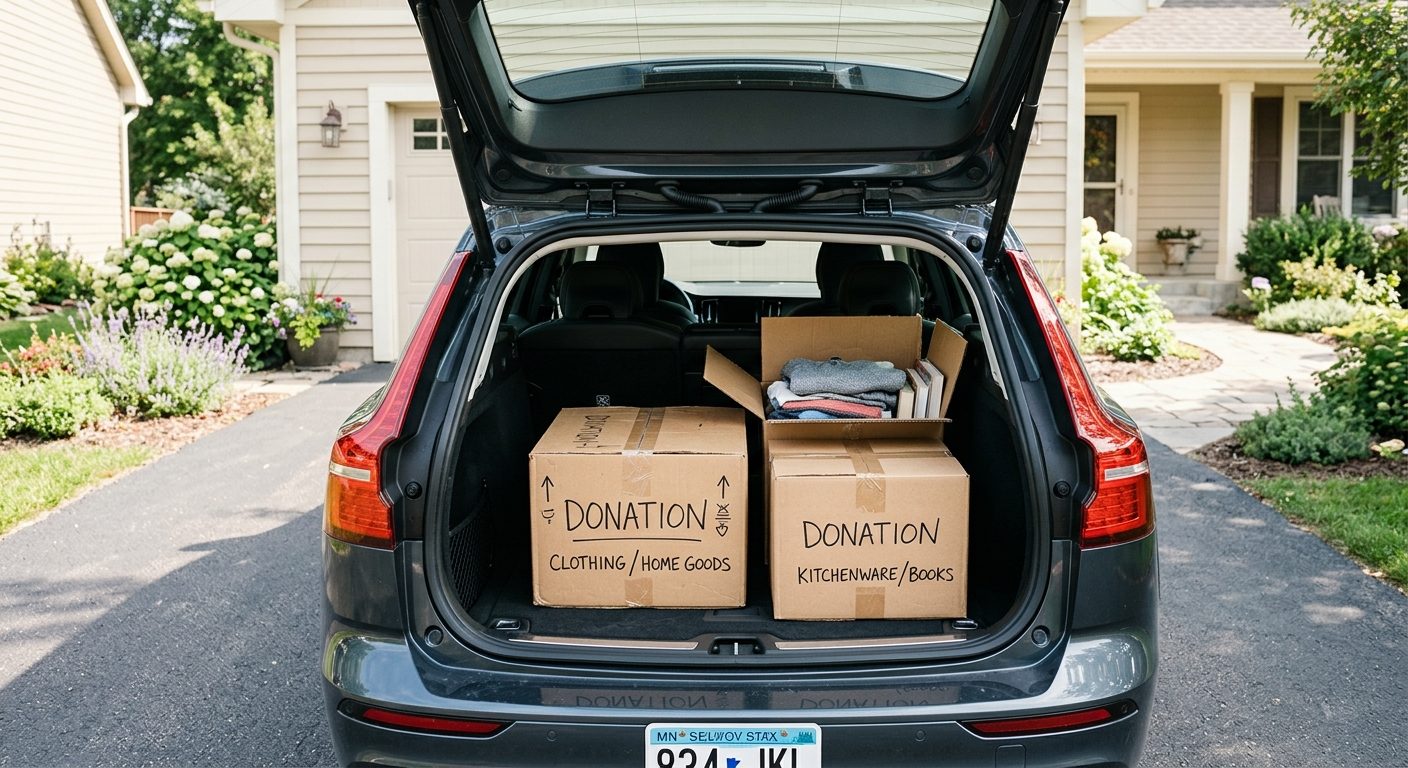
The short version: for most households, the big national charities cover the bulk of what you'll donate. Goodwill and Savers are great for drop-off of clothing and general housewares. Habitat for Humanity ReStore is your best bet for furniture and appliances and usually offers pickup. Salvation Army takes a wide range and schedules free pickups. Also, don't overlook smaller local charities, which are often the best home for unique or specialty items, and help to keep your positive impact within your community. No matter where you go, the most important rules are: check the accepted donations list BEFORE you load the car, book large-item pickups EARLY, and DON'T bother trying to donate anything damaged, stained, or recalled.
Donation isn't a dumping ground
It helps to start with the right expectation. Charities aren't disposal services. They resell donations, or give them directly to people in need, to fund their programs. So they only take what's actually usable and/or saleable. Condition is everything! Something torn, stained, broken, or heavily worn isn't a donation to them. It's a cost, because they have to pay to dispose of it.
That's why a little sorting up front saves you so much wasted effort. If you've already figured out what's worth selling (our guide on valuing belongings without an appraiser covers that), the donation pile is everything that's still good and useful but not worth the effort of a sale. It's the "donate" bucket from our room-by-room plan for emptying a home. That's the stuff charities actually want.
Where to donate, by what you have
Here are the national outlets that cover the majority of a typical home's donations. Policies vary by local branch, so treat this as a starting point and confirm with your nearest location.
| Where | Best for | Pickup? |
|---|---|---|
| Habitat for Humanity ReStore | Furniture, large appliances, building materials, home goods | Yes, at most locations (some ask a minimum donation or a small fuel fee) |
| Salvation Army | Furniture, housewares, clothing, books, electronics, some appliances | Yes, free, scheduled by ZIP code on their website |
| Goodwill | Clothing, housewares, small furniture, working electronics | Rarely, mostly drop-off |
| Furniture banks (Furniture Bank Network) | Gently used furniture given directly to families in need | Often, if the condition is good |
A few specialty options worth knowing, because the general thrift stores aren't always the best home:
- Clothing and linens: Local shelters often need coats, blankets, and work clothes specifically.
- Books: Search for local "used book" shops. They'll often take your books, pay you for the saleable ones, and recycle the others. You can check with your local library too. But they're generally only interested in new releases in very good condition.
- Eyeglasses: Lions Club collection boxes, found at many libraries and clinics.
- Working electronics: Make sure to wipe your data first! Then check out options like Cellphones for Soldiers.
- Medical equipment: Search for local "medical-equipment reuse" programs and some disease-specific nonprofits, which are often thrilled to get walkers, wheelchairs, and shower chairs.
Don't overlook smaller local and specialist charities
The national names are the "easy button" for most donations, but they aren't always the best option. Smaller local charities exist almost everywhere. Some are highly specialized, taking very specific items and making sure they get to the right homes. For example, a senior quilting club that wants fabric and machines, or a model-railroad club looking for rolling stock and track. Other options, like a true neighborhood thrift shop, accept a wide variety of items, but keep everything for direct local use. You can also look on Facebook for local "Buy Nothing" groups. These are places where you can offer up items for free directly to people in your community.
Take the extra time to find these local options when you really want your donations to have the biggest impact. If you're just looking for convenience, the national options can usually handle it.
Sorry, but we can't take that (What almost everyone rejects)
Save yourself the trip. These are the items most charities turn away, usually for safety or hygiene reasons, or they're just too hard to resell:
- Mattresses and pillows. Many places won't take them at all because they're hard to sanitize and some states restrict reselling them. A few, including some Salvation Army and Habitat locations, will accept clean ones in good condition. But definitely call ahead to make sure.
- Cribs, car seats, and older baby gear. Usually rejected because of safety concerns. They have to meet current federal standards and the materials they're made of degrade over time. Charities don't want the liability.
- Recalled anything. If it's on the Consumer Product Safety Commission recall list, no reputable charity will take it. Check if you're unsure.
- Big tube (CRT) televisions and dead electronics. No one wants these anymore. Plus, they often have hazardous materials inside. Don't bother trying to donate. Just take them to an electronics recycler.
- Damaged or particleboard furniture. If it's made of cheap particleboard, or it's damaged or dirty, it will usually just need to go in the trash.
- Opened toiletries, medications, expired or opened food items. Again, safety, sanitary, and liability concerns. These also need to be disposed of properly.
- Hazardous materials. Paint, chemicals, fluorescent lightbulbs, and similar items need to go to a household hazardous-waste drop-off, not a charity.
How to make donating actually easy
- Check the accept list before you load the car. Every major charity posts one online. Take two minutes to check before you load the car.
- Book large-item pickups early. Free furniture pickups fill up quickly, sometimes a week or two out. So schedule as soon as you know your timeline.
- Clean and prep items. Seriously, just a quick wipe-down can genuinely change how "good" something looks and whether or not it gets accepted.
- Batch by destination. Group everything headed to the same place so you make one trip, not five.
- Keep your donation receipt. If you itemize on your taxes, non-cash donations to a qualified charity are generally deductible at fair market value, and larger totals come with extra IRS documentation rules. Keep an itemized receipt and a list of what you gave. (This isn't tax advice, so check specifics with your tax advisor!)
Help!
I get it... this is a pain. People spend WAY too much time trying to find their local donation centers and then trying to figure out which items they can actually donate and where. Like literally hours. That's one of the exact challenges Aveho exists to solve for you. Aveho will help you figure out which items you can donate and give you specific local options to make the most of your donations!