 Aveho
AvehoIs Grandma's china worth anything? A realistic guide to inherited dishware, silver, and crystal.
Families often assume that the formal china in the dining room cabinet is one of the more valuable things in the home. Unfortunately, they're almost always disappointed. Thankfully, real money is frequently sitting just a shelf away, hiding in plain sight. Here's how to tell what you actually have.
By Brian Filip, founder of Aveho and an experienced executive in the home-contents valuation industry. Before founding Aveho, Brian led a team of over 250 people at one of the nation's largest providers of home-contents valuation services to insurance companies.
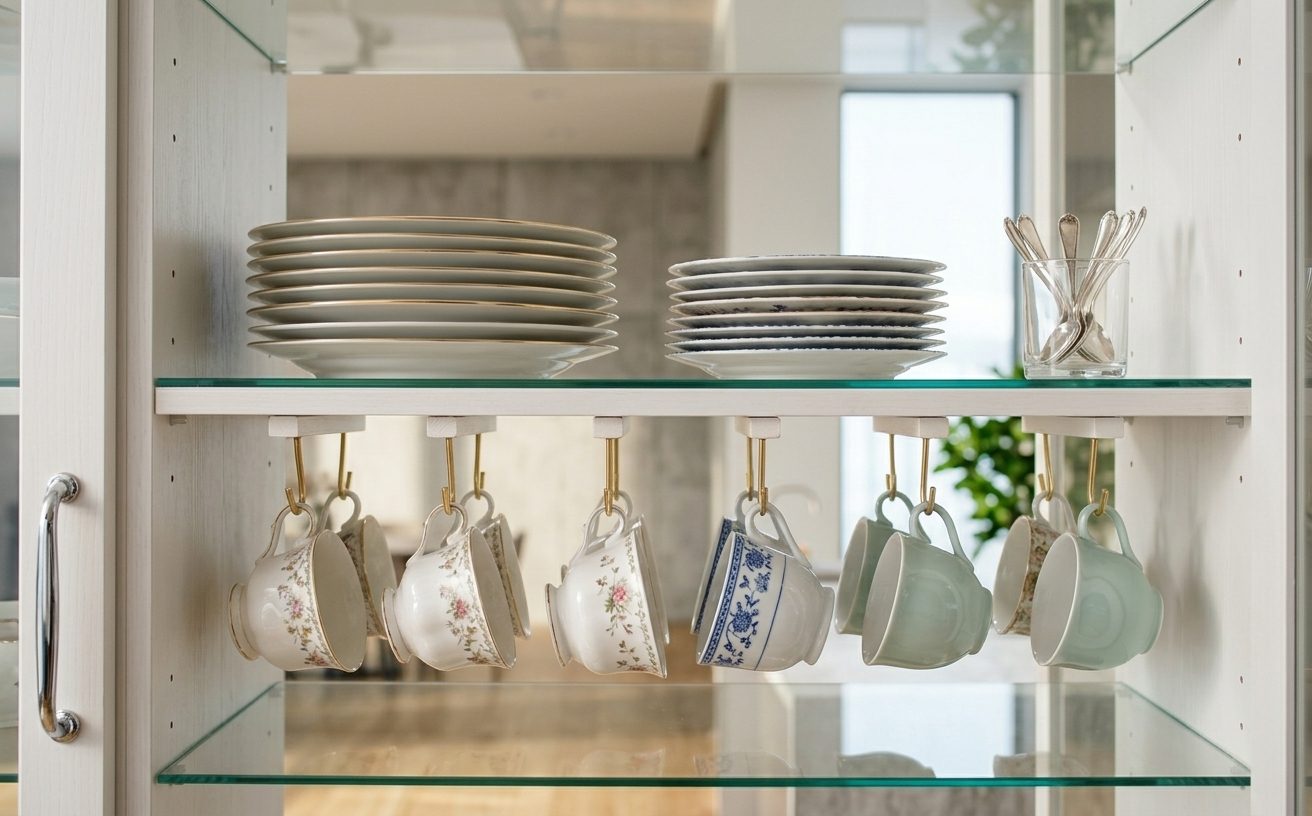
The short version: for most families, Grandma's formal china is worth far less than you'd hope, often very little at resale, while the sterling silver in the same room may be worth real money by weight. The fastest way to sort it all out is to check the marks. "Sterling" or "925" means solid silver with genuine melt value. "Silverplate" doesn't. Fine china and crystal come down to brand, pattern, and condition, and for everyday formal sets, demand has largely collapsed. Flip everything over, read the marks, and separate the solid silver from everything else first.
Start with the china, and lower your expectations
This is the hard part to hear. Formal fine china has lost most of its resale value over the last twenty years. Younger buyers aren't hosting formal dinners, and a wave of downsizing has flooded the market with sets nobody's buying. A complete service for eight or twelve from a well-known maker like Lenox, Noritake, Royal Doulton, Wedgwood, or Mikasa often sells for a small fraction of its original price, sometimes just $50 to $200 for a full set, and sometimes less. Gold or platinum rims make it worse, not better, because that trim means no dishwasher and no microwave, which rules out most of the buyers who remain.
There are real exceptions. China can hold value when it's a rare or discontinued pattern that people are actively trying to complete, an antique or collectible maker, or a complete set in genuinely mint condition (most likely still stored in original packaging). For odd pieces and partial sets, a matching service like Replacements, Ltd. buys and sells individual items to people filling in a pattern. That's often the most practical route for a few good pieces. But keep in mind that they pay wholesale, not retail.
The silver is where the real money lives
Here's the surprise most families miss. The sterling silver in the same dining room can be worth far more than the china it sits next to. Sterling is 92.5% silver, and silver has climbed sharply, trading north of $60 an ounce in 2026, roughly double where it sat at the start of 2025. That makes sterling flatware and serving pieces worth real money by weight alone.
So the single most important check in the whole cabinet is this: is it solid sterling or is it plated? Look on the back for the words "Sterling" or the number "925." (925 represents the silver content: 92.5% The other 7.5% is usually something like copper.) That's considered solid silver. If instead you see "EP," "EPNS," "silver plate," or "A1," it's plated. That means the silver is just a very thin layer covering a cheap base metal, with essentially no melt value. This one distinction is the difference between a $2,000 set and a $50 one, so check every piece.
A quick example of why weight matters. A sterling dinner fork can weigh 55 to 70 grams. At 92.5% purity and a spot price above $60 an ounce, a single heavy fork holds around $100 in raw silver, before a buyer takes their cut of around 20%. Multiply that across a full set of flatware and serving pieces and it adds up fast. One caution: sterling knives are the exception. Because they usually have hollow, weighted handles and stainless steel blades, they hold much less silver than their weight suggests.
Some silverware is worth much more than just its silver content. Certain makers and patterns sell for a large premium over the melt value. A complete setting in a sought-after pattern from Tiffany & Co., Gorham, Reed & Barton, or Wallace can command far more than its weight. A full set of Tiffany's "Chrysanthemum" pattern, for instance, can bring $10,000 to $20,000 or more at auction, several times its melt value. So before you sell anything solid by weight, identify the maker and pattern first. You don't want to melt down a collectible.
Crystal: a few names, and everything else
Crystal follows the same rule as china. Fine lead crystal from names like Waterford, Baccarat, Lalique, and Steuben still sells, especially recognizable patterns and complete sets, though even Waterford has softened in recent years. Generic pressed glass or unmarked crystal has little resale value. Check the base for an etched maker's mark, and inspect carefully, because chips and cloudiness kill value fast.
How to check what you actually have (a 15-minute triage)
You can sort the whole china cabinet quickly if you work in order:
- Flip everything over and read the marks. China gives you a maker and usually a pattern name. Silver tells you "Sterling/925" or "plate." Crystal shows an etched brand mark, or nothing.
- Separate solid sterling from plate immediately, and weigh the sterling. This is where the real value is, so handle it first.
- Look up sold prices, not asking prices. Search the maker plus pattern plus "sold" or use completed-listing filters to see what pieces truly bring, not what hopeful sellers are asking.
- Note completeness and condition. A full, undamaged set is worth far more than a partial one, and damage takes most items to zero.
What to do with each pile
Once it's sorted, the decisions are easy. Sell solid sterling by weight to a reputable buyer, after getting more than one quote. If it's a collectible pattern, take it to a specialist or auction, rather than selling it for the melt value. Sell the genuinely valuable china and crystal (the sought-after patterns and complete sets) through replacement services or collectors. And for everything else, keep what you love and will actually use, offer the rest to family, and donate what's left. There's no shame in keeping Grandma's china simply because it's Grandma's. Just don't count on it as a financial windfall.
This is one slice of a much bigger question. For the whole-house version of how to figure out what things are really worth, see our guide on how to value your parents' belongings without an appraiser.